

Open Letter
- Signatories
- 24 companies and organisations across the European agri-food valuechain including the Ministry of Future Affairs
- Format
- Open letter
- Published
- Brussels · 18 May 2026
- Pages
- 4
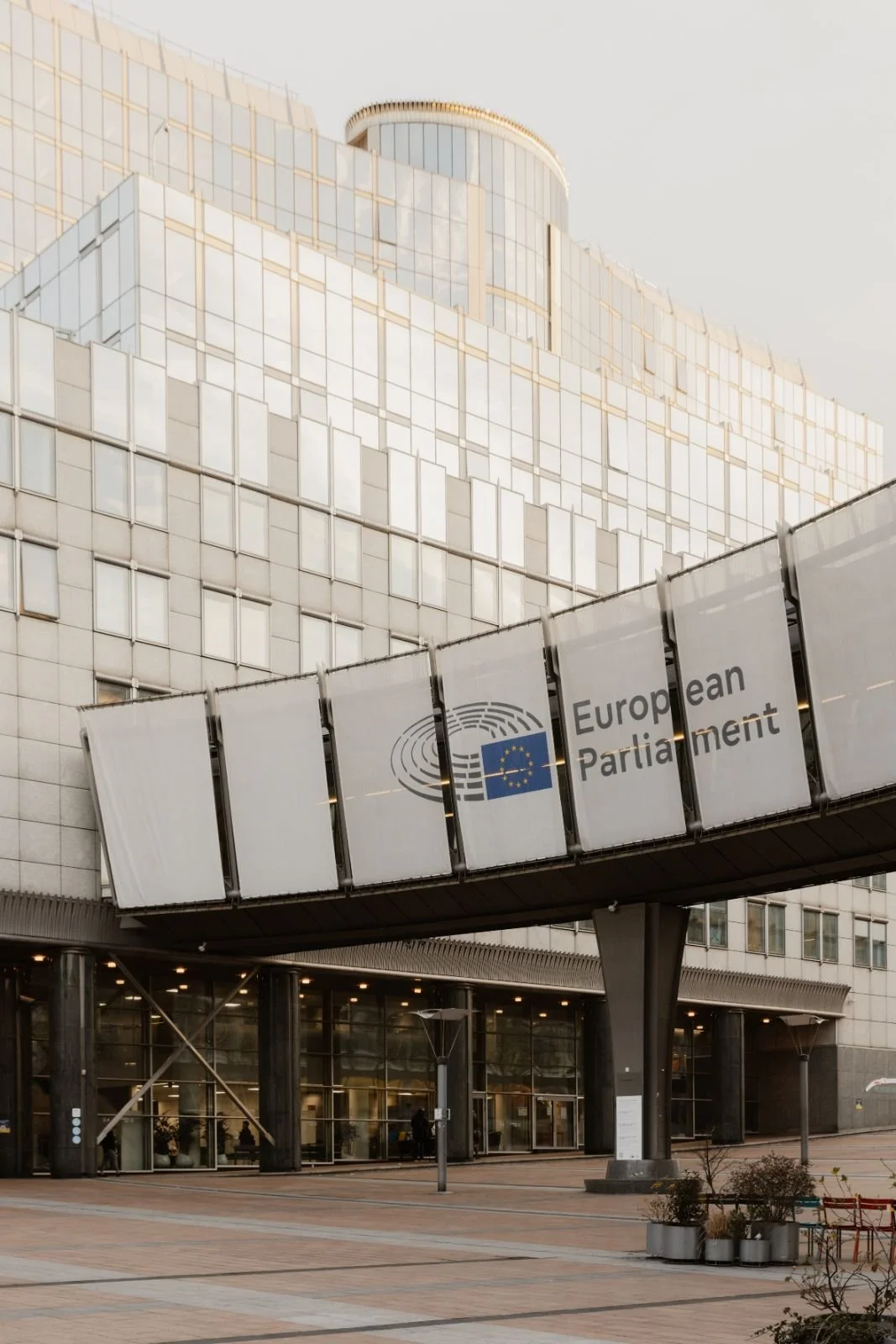
In a joint letter, the Ministry of Future Affairs and partners across the agri-food value chain call on the Commission to use the Biotech Acts I and II to keep food innovation and production in Europe.
Joint industry call by the agri-food value chain on the Biotech Acts I and II
Brussels, 18 May 2026
Dear Executive Vice-President Séjourné,
CC: President Ursula von der Leyen; Commissioner Zaharieva; Commissioner Várhelyi
CC: Cyprus Presidency; Members of the European Parliament
We, the undersigned companies and organisations active across the European agrifood value chain, from Life science companies R&D, ingredient suppliers, food and drink manufacturers, and food technology and equipment companies, to investors, research institutions, accelerators and start-ups, are writing to call for urgent regulatory action to ensure that European agrifood innovation, manufacturing and production remain in Europe, safeguarding our long-term competitiveness, resilience and biosecurity.
Under the FAO definition, biosecurity is a strategic and integrated approach to managing risks to human, animal and plant life and health, and associated risks to the environment. Food security is therefore an integral part of biosecurity, not a separate concern. In a world of growing geopolitical instability and supply chain disruption, food biomanufacturing is not only an economic opportunity but a strategic and biosecurity necessity. The Biotech Acts (I and II) are the vehicle to deliver this, and time is of the essence: Novel Foods must be included in Regulatory Sandboxes and risk assessment practices must be streamlined and simplified to enable timely market access for agrifood innovation without compromising on safety standards and without undue delay.
We welcome the Commission's work on biotechnology, including Biotech Act I and the corresponding simplification of food, feed and chemicals legislation. We also welcome the announcement of a Biotech Act II, which is essential for the competitiveness of the European agrifood industry, food manufacturing technology companies, and the wider industrial innovation ecosystem.
We write, as companies and organisations spanning the full European agri-food value chain, with a clear ask: create the conditions for our innovations to scale in Europe, not leave it. The tools, talent, and science are here. What is needed now is the political will to act, and to act fast.
Exporting our future economic capital
Europe is actively exporting its future economic capital, with our food innovation start-ups scaling up in the United States. SMEs and multinationals are commercialising fewer products in industrial biotechnology in Europe. Europe is funding the R&D and early-stage innovation and then watching them leave. The competitive pressure is intensifying. China is pursuing an aggressive industrial policy across biotechnology and food biomanufacturing, including in precision fermentation, amino acids, and feed additives, and has explicitly included new protein sources in its national food security and biosecurity strategy. Today, a considerable amount of fermentation-derived amino acids used in EU livestock feed are already produced in China, as are a vast majority of key vitamins for animal consumption. Europe’s dependence on non-European sources for these critical inputs is not only a competitive disadvantage: it is a biosecurity vulnerability in the fullest sense of the FAO definition, encompassing the integrity of our food supply, animal health and the wider food system. These are not future risks. These are current strategic dependencies. The US, under the previous administration, invested heavily in domestic biomanufacturing. Europe has yet to respond with equivalent ambition.
An entire value chain affected
The consequences of inaction extend well beyond food biotechnology itself. Europe’s conventional food and feed industry, its agricultural sector and its food manufacturing technology companies all depend on access to competitively priced, domestically produced biotech-derived ingredients and inputs. If the innovation and production base continues to migrate, the entire value chain will face higher costs, longer supply lines and deepening exposure to decisions made in Beijing or Washington. What begins as a regulatory gap becomes, over time, a structural dependency that no single policy intervention can easily reverse.
This must change now. We therefore urge action on three priorities in Biotech Act I and in the subsequent Biotech Act II, which must go further in building the long-term policy architecture Europe needs to lead.
1. Make regulation a strategic enabler
Correct the novel foods exclusion in Biotech Act I now.
Europe has the scientific foundation to lead in emerging and industrial biotechnology, with critical cross-cutting applications that can strengthen our food security and reduce strategic dependencies. To unlock this potential, regulation must become an enabler. Today, EFSA assessments frequently take significantly longer than the regulated timeline of 9 months, and study costs have become unaffordable for innovative European companies. Risk assessments must be streamlined and processes simplified. This is a matter of making EFSA more efficient without compromising on the European safety standards. Bringing Novel Foods into the Regulatory Sandbox framework is a concrete, immediate fix. The current exclusion of novel foods from the Regulatory Sandbox framework (Chapter III Article 49a and the corresponding Recital 115) was made without an impact assessment and appears difficult to reconcile with the overall objectives of the Biotech Act framework, thus creating an internal inconsistency within it. Correcting it would send a powerful signal that Europe is open for food innovation and committed to keeping strategically important technologies developed here in Europe, rather than ceding ground to China and the United States.
2. European food system resilience
Make Biotech Act II cover food biomanufacturing as a food and biosecurity priority.
Agriculture and food biomanufacturing are already converging. Hybrid products blending conventional and novel ingredients are not a futuristic scenario: biotech made in Europe is already on European shelves today. Fermentation-derived ingredients and feed inputs play an important role in supporting resilient and sustainable agrifood systems. Europe’s current dependence on imported fermentation-derived feed ingredients means that any disruption to supply, whether through geopolitical pressure, trade restrictions or deliberate interference with critical supply chains, directly threatens European livestock production and food security. The current disruption to the Strait of Hormuz, which has cut off around one third of globally traded fertilisers and sent prices up 20–30%, illustrates precisely what structural agrifood system vulnerability looks like. Attacks on critical infrastructure, from energy to food supply chains, are a growing reality that Europe must plan for.
It is essential that the Acts address food biomanufacturing as a complementary part of a resilient European protein supply, explicitly from a food security and a wider biosecurity risk perspective. Under the FAO definition, biosecurity encompasses food safety and animal and plant life and health: food security is not a separate category but an integral dimension of biosecurity itself. A resilient European agrifood system requires a broad toolbox of agricultural inputs, including bio-solutions and sustainably sourced biomass, and the internal inconsistencies of Act I must be resolved to support this.
3. From lab to fab
Align investment frameworks to scale European food biomanufacturing domestically.
Food manufacturing should be treated as critical infrastructure, and Europe’s world-class agri-food industry and biotechnology ecosystem deserve a funding framework that matches their strategic importance. A forward-looking approach covering pre-commercial stages, scale-up and infrastructure is a prerequisite for keeping European innovation in Europe, creating employment and unlocking new opportunities for agriculture and the biobased economy. Funding and regulation must move together: the steps below will only reach their full impact alongside the regulatory fixes set out in points 1 and 2.
We call for three concrete steps:
First, establish market validation equivalence. Regulatory approval in comparable jurisdictions, including Singapore, the United States and Israel, should be recognised as substantially reducing investment risk in EIB and InvestEU assessments. European food biotech companies with validated products in international markets must not be treated on the same terms as entirely pre-commercial businesses with no external market validation.
Second, introduce milestone-based funding structures for pre-EU approval scale-up. As applied in medical biotechnology, pre-approval investment can be structured around regulatory and commercial milestones. Food biomanufacturing is already recognised as a strategic technology under STEP. Companies that have completed EFSA risk assessment have resolved technology risk and should be eligible for scale-up financing.
Third, deploy InvestEU as it was designed. The programme exists to address market failures, high risks and regulatory-induced financing gaps. Novel foods approval timelines that routinely run three times longer than regulated are a textbook case. Unlocking InvestEU alongside IPCEI Biotech state investments would allow European companies to scale here rather than relocate.
The window is narrow. China has placed food biomanufacturing at the heart of its Five-Year Plan. Europe has the science, the companies and the instruments. It now needs the funding architecture to match.
As signatories from across the European agri-food value chain, representing life science companies, ingredient suppliers, food and drink manufacturers, food equipment companies, investors, research institutions, accelerators and start-ups, we invite the Commission and co-legislators to seize this moment and use Biotech Act I to correct immediate regulatory barriers, and ensure that Biotech Act II delivers the long-term policy and investment framework required for food innovators to scale in Europe, not relocate. Together, these steps would position Europe as the place where food innovation is developed, scaled and brought to market.
Yours sincerely,
Signatories
Biotech Booster
Corbion
De Smet Engineers & Contractors
Fraunhofer IGB
Jäckering
Kerry
GEA
Planet B.io
Lactosan
Genopole
SPRIN-D
European Biosolutions Coalition
World Fund
Schaumann
Nedgex
TUM Venture Labs
Sparkfood · Sonae
Rootcamp
Bigu Pro
HTGF
Flora Ventures
Bioeconomy for Change
Ministry of Future Affairs
Protéines France
How to cite
European agri-food value chain (2026). Open letter by the agrifood value chain with regards to Biotech Act 1 & 2. Ministry of Future Affairs. https://new.ministryoffutureaffairs.org/publications/joint-industry-call
Read the full text